KNOCKED OUT TOOTH (AVULSED TOOTH)
What you need to know about what to do if your tooth is knocked out
In the case that a tooth is fully knocked out of the mouth, acting fast is crucial in order to save the tooth. A knocked-out tooth is considered a medical emergency and it is therefore important to be educated on the proper steps to take in the case of this event. If the tooth is replaced into the socket within 5 minutes of falling out, the tooth will most likely survive. If the tooth has been stored correctly, there is a good chance that the tooth can survive between 5 to 60 minutes of it falling out. If the tooth has been out of the mouth for longer than 60 minutes, the chance for survival of the tooth is greatly decreased.
CAUSES OF A KNOCKED OUT TOOTH
A tooth is generally knocked out during an injury or accident involving sports, car accidents, falls, assaults and fights.
WHAT TO DO IF A TOOTH IS KNOCKED OUT
If it is an adult tooth that has been knocked out, you should immediately try to place the tooth back in its socket. This should be done by holding the tooth by the crown (the white part) and rinse it in water if it is dirty. Make sure to not touch it by the root (the yellow, pointy part) as the root contains fibers that are important for the healing process. Then place the tooth back into position and bite on a cloth, towel or piece of clothing to hold the tooth in place until arriving at a dentist.
If the individual is not conscious, do not place the tooth back inside the mouth as they may swallow it.
If you are unable to put the tooth back in place, place the tooth in a container of either milk or saliva and bring it with you to the dentist. This will help keep the root moist.
If a child knocks out a baby tooth, do not try put the tooth back in place as this may damage the adult tooth that is growing underneath the gum. Apply clean gauze to the gum socket to control bleeding and see a dentist.
AT THE DENTIST
If the tooth was recovered and is healthy, the dentist will first flush out the tooth socket with water to clean it. A root canal may or may not need to be performed depending on the condition of the tooth. The tooth will then be placed in the socket and an X-ray will be taken to ensure that the tooth is in the correct place. The dentist will then splint the tooth to the teeth on either side with a wire. This will hold the tooth in place temporarily. The root will generally reattach itself to the bone in 3 to 4 weeks. If there is more severe damage to the area and the bone, it may require more time.
TREATMENT OPTIONS
Denture:
For one or a few missing teeth in a row, partial dentures are used. A patrial denture involves a plastic base, similar to a retainer that is customized to the colour of your gums. Attached to the base are natural looking prosthetic teeth. The denture attaches to the other remaining teeth via metal clasps. The denture is removable and therefore not permanent. It is recommended to remove the denture at night and thoroughly clean it.
Dental bridge:
This involves a false tooth that is held in place by crowns placed on the teeth on either side of the missing tooth. A bridge is only viable if the teeth around the missing tooth are strong and are able to support the false tooth. A bridge is composed of white ceramic materials and therefore resembles a natural-looking tooth. Bridges can last up to 7 years, after which they will need to be replaced.
Implant:
Dental implants are the strongest and most durable teeth replacement option; however they are costly. A titanium screw is placed into the jaw. Over the course of a few months, the jawbone will fuse to the titanium screw. This screw will then anchor a prosthetic crown. There needs to be sufficient bone in the jaw to support the implant. Implants can last for as long as they are correctly taken care of.
IF THE GAP IS LEFT UNFILLED
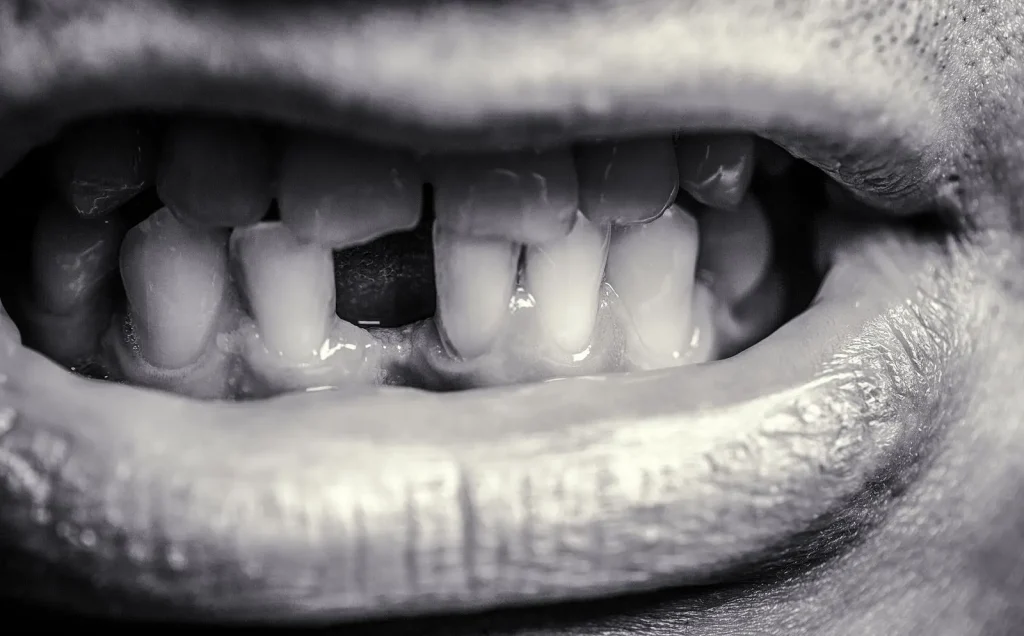
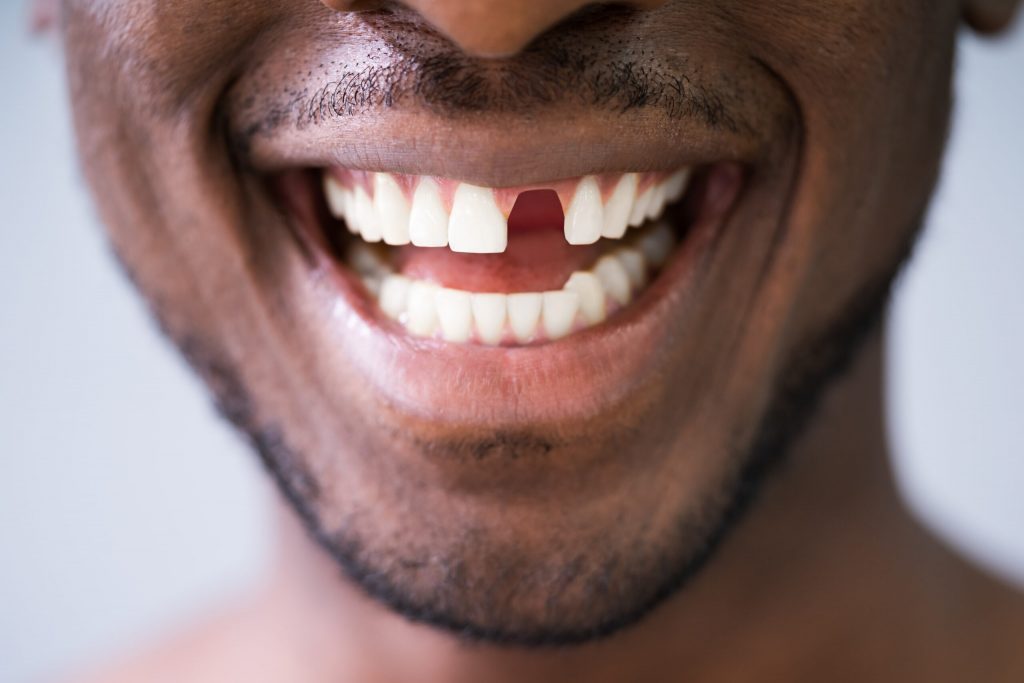
It is an option for an individual to choose to leave the gap of the missing tooth unfilled, however a dentist should be consulted as it can cause certain problems. Firstly, it can impair both chewing as well as speech. Secondly, food can get stuck in the gum and if not cleaned properly, bacteria can grow and infection can spread. Moreover, not having a tooth in the gap can cause surrounding teeth to move positions and can cause the teeth to become skew. If a child’s baby tooth was knocked out, a dentist can assess whether the tooth was almost ready to fall out and thus will not affect the growth of the new adult tooth.
PREVENTION
While playing sports, particularly contact sports such as Hockey and Rugby, a mouthguard should always be worn. Additionally, a seatbelt should always be worn in vehicles. Avoid physical fights as these can lead to blows to the face. Besides for those, a knocked-out tooth is mostly an uncontrollable traumatic injury that can unfortunately not be prevented.